
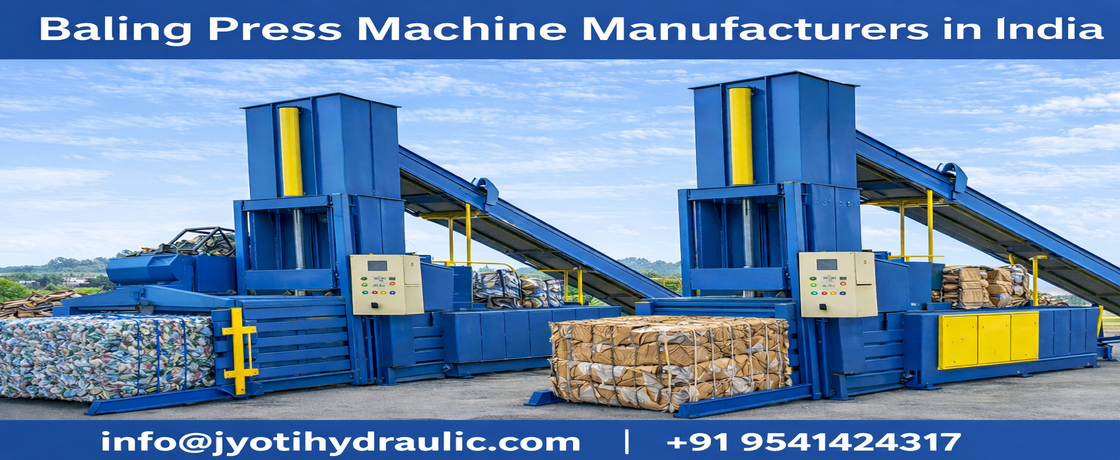
Jyoti Hydraulic is helping modern recyclers, scrap processors, beverage plants, and metal recovery businesses transform loose aluminum and steel cans into high-density, transport-ready bales with advanced automatic baling press technology. In an industry where storage space, labor costs, material handling efficiency, and sustainability directly affect profitability, the automatic beer can baling press machine has become a critical asset. For businesses searching for a reliable Beer Can Baling Machine Manufacturer, Cold Drink Can Baling Machine Manufacturer, Iron Scrap Baling Machine Manufacturers in India, or trusted Baling Press Machine Manufacturers, choosing the right equipment is no longer just a purchasing decision. It is a strategic investment in productivity, compliance, and long-term recycling value.
Industry Overview: Why Metal Scrap Recycling Needs Efficient Baling Solutions
Metal scrap recycling is one of the most important segments of the circular economy. Beer cans, cold drink cans, tin containers, iron scrap, sheet cuttings, light gauge steel scrap, and mixed non-ferrous packaging waste are generated in large volumes every day. Without proper compaction, this scrap occupies excessive floor space, increases transport costs, and creates handling inefficiencies across the recycling chain.
Loose beverage cans are especially challenging. Aluminum cans are lightweight but highly voluminous. A truck full of uncompressed cans may carry far less actual material weight than a truck loaded with properly baled cans. That means more trips, higher fuel consumption, greater labor dependency, and reduced per-load profitability.
This is where automatic baling press machines deliver measurable value.
An automatic beer can baling press machine is designed to compress metal scrap into compact, uniform bales that are easier to store, move, stack, and sell. For recyclers and scrap yards, bale density directly influences logistics efficiency. For manufacturers and collection centers, baling improves housekeeping, worker safety, and process discipline.
As environmental regulations become stricter and the demand for recycled metal continues to grow, businesses are looking for dependable machine partners rather than generic suppliers. That is why industrial buyers increasingly prefer experienced Baling Press Machine Manufacturers with proven engineering, hydraulic reliability, and application-specific design expertise.
Understanding the Automatic Beer Can Baling Press Machine
What Is an Automatic Beer Can Baling Press Machine?
An automatic beer can baling press machine is a hydraulic compaction system used to compress empty metal cans and similar scrap into dense bales. These machines are commonly used for:
- Aluminum beer cans
- Cold drink cans
- Soft beverage packaging
- Light metal containers
- Iron scrap pieces
- Tinplate scrap
- Mixed metal waste from sorting lines
Unlike manual or semi-automatic systems, an automatic machine reduces operator intervention and improves cycle consistency. Material is fed into the chamber, compressed by hydraulic force, and tied or ejected in bale form depending on machine configuration.
How the Machine Works
The working principle is straightforward, but the performance depends heavily on design quality:
1. Scrap Feeding
Loose cans or metal scrap are loaded into the chamber manually, through a conveyor, or with a hopper-fed arrangement in larger automated plants.
2. Hydraulic Compression
A powerful hydraulic cylinder exerts pressure on the scrap, reducing void space and forming a compact bale. Depending on the machine, side compression, top compression, or multi-directional compression may be used.
3. Bale Formation
Once the desired density is reached, the compressed material is shaped into uniform bales suitable for transport and storage.
4. Bale Ejection
The finished bale is ejected mechanically or hydraulically for easy collection and dispatch.
5. Repeat Automation Cycle
In automatic systems, PLC-based controls can optimize repeat cycles, reduce downtime, and improve overall throughput.
Technical Insights: Features, Specifications, and Automation Advantages
Industrial buyers want more than a machine brochure. They want dependable performance under real production conditions. A well-engineered automatic beer can baling press should offer the right balance of pressure, chamber size, cycle time, and automation.
Common Technical Features
While exact configurations vary by application, leading machines typically include:
- Heavy-duty welded steel structure
- High-pressure hydraulic cylinders
- PLC-based control panel
- Automatic or semi-automatic bale ejection
- Low power consumption hydraulic system
- Durable seals, valves, and pumps
- Overload protection and operator safety features
- Compact footprint for scrap yard or plant installation
- Customizable chamber sizes and bale dimensions
Typical Performance Parameters
Depending on model size and scrap type, a machine may be selected based on:
- Bale size requirement
- Output per hour
- Material type and moisture condition
- Compression force tonnage
- Feed method
- Power rating
- Automation level
- Continuous duty cycle requirements
For example, a recycling unit handling high volumes of aluminum beverage cans may prioritize faster cycle time and bulk feeding, while an iron scrap processor may require a stronger frame and higher tonnage.
Why Automation Matters
Automation is not just about convenience. It improves operational control in ways that directly affect ROI.
Better Throughput
Automatic cycling reduces idle time between loads and creates more consistent bale output per shift.
Lower Labor Dependency
One trained operator can often manage a much larger volume of scrap compared to manual compaction workflows.
Uniform Bale Quality
Consistent hydraulic pressure and cycle timing improve bale density, which matters for storage, shipping, and resale.
Reduced Human Error
Automated controls reduce the risk of improper compaction, uneven bale formation, and machine misuse.
Improved Safety
Modern systems are designed with control interlocks, pressure safeguards, and predictable operating sequences.
This is why many industrial buyers prefer working with a specialized Beer Can Baling Machine Manufacturer or Cold Drink Can Baling Machine Manufacturer that understands the realities of round-the-clock recycling operations.
Applications: Where Automatic Baling Press Machines Are Used
Automatic beer can baling machines are widely used across multiple industries, not just beverage recycling.
Scrap Yards and Metal Recycling Centers
Scrap dealers and recyclers use baling machines to handle collected aluminum cans, tin scrap, iron scrap, and mixed light metal waste efficiently.
Beverage Bottling and Packaging Plants
Production rejects, damaged cans, and line-side scrap can be compacted immediately, reducing clutter and improving shop floor management.
Municipal Waste Processing Facilities
Sorting and recovery centers handling dry recyclable waste can use baling systems to densify metal cans before dispatch.
Warehousing and Aggregation Centers
Collection hubs that receive loose scrap from various sources benefit from quick densification and better storage utilization.
Foundries and Secondary Metal Processors
Uniform bales improve scrap charging logistics and make material flow more predictable for downstream processing.
Automobile and Fabrication Scrap Handling
Some units also process light iron scrap, offcuts, punchings, and thin gauge metal generated in fabrication environments, making them relevant to buyers comparing offerings from Iron Scrap Baling Machine Manufacturers in India.
Key Benefits of an Automatic Beer Can Baling Press Machine
The true value of a baling press lies in what it changes operationally and financially.
1. Major Space Savings
Loose cans occupy several times more volume than compact bales. Baling frees up critical floor area for sorting, storage, or dispatch.
2. Lower Transportation Costs
Denser material means more weight per trip. Fewer trips can significantly improve logistics economics, especially over long distances.
3. Faster Material Handling
Forklift movement, stacking, loading, and inventory management become easier with standardized bales.
4. Better Scrap Value Realization
Well-compacted, cleaner, denser bales are more attractive to buyers and processors, often improving resale potential.
5. Reduced Housekeeping Burden
Neatly baled scrap minimizes clutter, spillage, and random material accumulation in work areas.
6. Improved Operational Discipline
A dedicated baling system turns scrap from a messy by-product into a controlled revenue stream.
7. Sustainability Gains
Efficient recycling workflows reduce waste handling inefficiency and support broader environmental goals.
8. Long-Term Cost Efficiency
Though the machine requires capital investment, savings in labor, transport, and space can create strong lifecycle value.
Buying Guide: How to Choose the Right Baling Press Machine
Selecting the right baling machine requires more than comparing price tags. Industrial buyers should assess the machine in relation to actual material conditions and operating goals.
Evaluate Your Scrap Type
Are you processing only aluminum beer cans, or also cold drink cans, tin containers, and iron scrap? Mixed material applications may require a stronger and more versatile design.
Estimate Daily Volume
A low-volume collector does not need the same system as a full-scale recycling plant. Overbuying increases capital cost, while underbuying creates bottlenecks.
Check Bale Density Requirements
Your downstream buyer, transporter, or melting unit may prefer specific bale dimensions and density ranges.
Assess Automation Needs
If labor availability is inconsistent or throughput is high, automatic or PLC-operated systems usually offer better long-term efficiency.
Review Build Quality
Look for robust fabrication, hydraulic reliability, cylinder quality, pump efficiency, and safety mechanisms.
Verify Service and Spare Support
Downtime is expensive. Work with a manufacturer that offers technical support, installation guidance, and parts availability.
Ask About Customization
The best Baling Press Machine Manufacturers can adapt chamber size, pressure rating, feeding arrangement, and ejection method to your needs.
Consider Power and Operating Costs
The ideal machine is not necessarily the biggest one. It is the one that matches your duty cycle with efficient energy use and manageable maintenance.
Future Trends in Metal Scrap Baling Technology
The baling machine industry is evolving quickly. Buyers are no longer focused only on hydraulic power. They are looking at intelligence, efficiency, and sustainability.
Smart Controls and PLC Integration
Advanced control systems help monitor cycle timing, pressure performance, and machine utilization for better production planning.
Energy-Efficient Hydraulics
Improved pump systems, optimized pressure control, and efficient component selection can reduce energy consumption.
Higher Automation in Sorting Lines
Baling machines are increasingly being integrated with conveyors, shredders, separators, and material recovery systems.
Data-Driven Maintenance
Condition monitoring and preventive maintenance approaches help reduce breakdown risks and extend machine life.
Sustainable Plant Design
As recycling businesses scale, baling machines are becoming central to greener, cleaner, and more organized operations.
For businesses preparing for long-term growth, partnering with forward-thinking Iron Scrap Baling Machine Manufacturers in India and established machine specialists can create a clear competitive advantage.
Why Industrial Buyers Trust Specialized Manufacturers
In a highly application-driven market, machine performance depends on engineering accuracy, not just sales claims. That is why businesses prefer manufacturers with actual exposure to scrap processing environments.
A specialized Beer Can Baling Machine Manufacturer understands issues like can spring-back, lightweight bulk handling, cycle speed, and bale stability. A trusted Cold Drink Can Baling Machine Manufacturer can guide buyers on automation level, chamber sizing, and production flow. Likewise, buyers handling mixed ferrous waste often seek experienced Iron Scrap Baling Machine Manufacturers in India that can deliver rugged machines built for tougher duty.
The right manufacturing partner should be able to provide:
- Application-based machine recommendations
- Clear technical consultation
- Build quality assurance
- Reliable service support
- Custom engineering for plant-specific needs
Conclusion
Automatic beer can baling press machines are no longer optional for serious recycling and scrap handling businesses. They improve density, reduce transportation costs, optimize space, enhance workplace efficiency, and support sustainable operations. Whether the requirement is for aluminum beer cans, cold drink cans, or mixed light metal and iron scrap, the right baling system can convert a labor-intensive process into a streamlined and profitable one.
For companies evaluating a Beer Can Baling Machine Manufacturer, Cold Drink Can Baling Machine Manufacturer, Iron Scrap Baling Machine Manufacturers in India, or dependable Baling Press Machine Manufacturers, the real differentiator lies in engineering quality, hydraulic performance, automation capability, and after-sales support. A well-selected baling press machine does more than compress scrap. It strengthens the economics of the entire recycling chain.
Frequently Asked Questions
1. What is an automatic beer can baling press machine?
It is a hydraulic machine that compresses loose beer cans and similar metal scrap into dense, manageable bales for easier storage, transportation, and recycling.
2. Who should use a beer can baling machine?
Scrap dealers, metal recyclers, beverage plants, municipal recycling centers, warehouses, and metal recovery businesses can all benefit from using a beer can baling machine.
3. What materials can a cold drink can baling machine handle?
A cold drink can baling machine can typically process aluminum cans, soft drink cans, light tin containers, and in some cases other light metal scrap depending on machine design.
4. Why is automation important in baling press machines?
Automation improves output consistency, reduces labor dependence, enhances safety, minimizes cycle delays, and helps maintain uniform bale density.
5. How do I choose the right baling press machine manufacturer?
Look for application expertise, machine durability, hydraulic system quality, customization options, technical support, and reliable after-sales service.
6. Are baling press machines suitable for iron scrap?
Yes. Many machines are designed for iron scrap, sheet cuttings, light ferrous scrap, and mixed metal waste. Businesses handling such material often compare solutions from Iron Scrap Baling Machine Manufacturers in India.
7. What are the main benefits of a baling press machine?
The biggest benefits include space savings, lower transportation costs, higher handling efficiency, better bale quality, improved scrap value, and cleaner plant operations.
8. Can a baling machine improve recycling profitability?
Yes. By reducing logistics costs, improving storage efficiency, and producing sale-ready bales, a baling machine can improve the overall economics of scrap recycling.
9. What industries commonly use baling press machines?
Industries include metal recycling, beverage manufacturing, packaging, municipal waste recovery, warehousing, foundries, and industrial fabrication.
10. Why work with experienced baling press machine manufacturers?
Experienced manufacturers can recommend the right configuration, ensure machine reliability, and provide technical support that helps maximize machine life and performance.
Contact Jyoti Hydraulic
Looking for a trusted partner for metal scrap recycling equipment?
Contact Jyoti Hydraulic today for product inquiries, machine specifications, pricing details, and application-based expert guidance. Whether you need a customized solution, want to compare machine configurations, or are ready to invest in a high-performance baling system, our team is here to help.
Request a quotation, schedule an expert consultation, or discuss your recycling requirement today.
📧 Email: info@jyotihydraulic.com
📞 Phone: +91 9541424317


